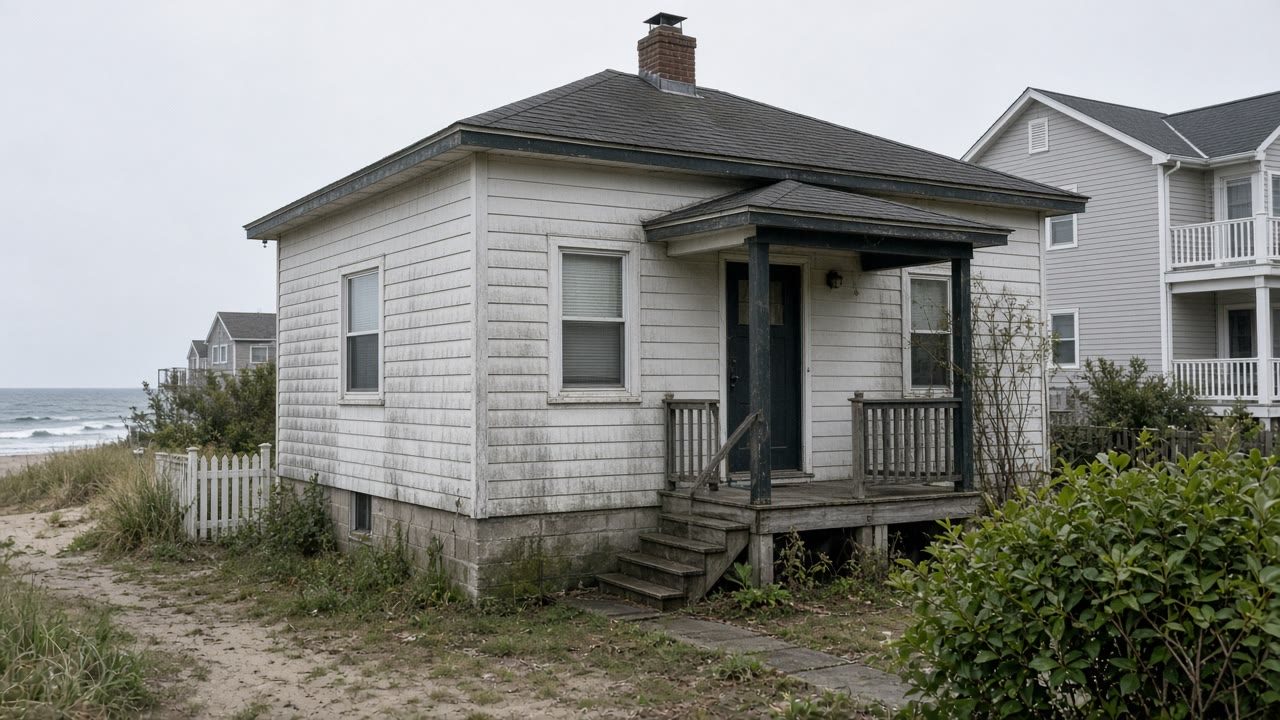
Long Beach and the surrounding Nassau County area
Damp, musty or flooded? Find out which licensed job your Long Beach house needs first
Smell must under the house, or see a stain after a storm tide? On a barrier island the water is often not a leak you can stop, so removal is not always the first job. Tell us what you see and where. We arrange the licensed assessor, removal firm or drying crew your house needs, in the order New York sets.
- Licensed New York firms
- A person calls you back
- Assessor kept separate from remover
Which flag is flying?
Which flag is flying in your house?
Pick the flag closest to what you see. Each one points to the job that usually comes first.
Green flag
A musty smell or a new stain, and no water you can point to.
Often damp air or a small patch. Measure it. A patch of about ten square feet or less is usually a job you can handle yourself, and if you cannot find the source, an inspection can.
Yellow flag
Dark staining or growth on a wall, ceiling or framing, and you cannot tell how far it runs.
Wet material usually runs further than the stain. If the area may be over ten square feet, New York puts a written assessment before any removal.
Red flag
A storm tide, flood or burst pipe put water in, and things are still wet.
Drying comes first, while the job is still only wet. Extracting and drying now can keep it from becoming a licensed mold project.
Double red
Growth covers more than about ten square feet, or has soaked into drywall, carpet or insulation.
New York treats this as a licensed project. An assessor writes the plan, a separate firm removes to it, and the assessor checks the work.
Tell us what you are seeing
Answer a few plain questions, and add the room and a photo if you have one. You get a call back and a clear next step, with no obligation.
The questions people ask before they call
Which job comes first: inspection, removal or drying?
It depends on what you see. If water is still in the building, drying comes first. If growth covers more than about ten square feet, an independent assessment comes before any removal. If the patch is small and you know the cause, you may handle it yourself. Tell us what you see and we say which one you are on.
Does Long Beach flood risk change how mold work is done?
Yes. Raised houses here have openings under the floor that must stay open, so you cannot seal the space and dry it like a room. The work is drying the framing and removing what holds water, such as insulation and stored boxes.
Can you help if I live in a co-op, condo or rental?
Yes. In those buildings a board, managing agent or landlord often decides who does the work, so we help you work out whose call it is and what to put in writing. Then we arrange licensed firms for the work you or the building approve.
Do you do the inspection and the work yourselves?
No. We arrange licensed New York firms and introduce you to them, and the work is covered by your contract with the firm. We keep the assessor and the removal firm separate, as state law requires.
What should I have ready when I call?
The room, what you see, roughly how big it is and when water last got in. Photos help, and so does knowing who owns the wall or decides on repairs. If you do not know the size, say so and we will help you measure it.
The damp is under the house and I never go down there. Where do I start?
Open the access panel in daylight and look at what is there. Photograph standing water, wet insulation, stored boxes and any equipment, and note any smell. Send the photos with your request and we tell you whether this is a clearing job, a drying job or an assessment.
Why assessment and removal stay separate in New York
Above ten square feet, New York does not let one company assess the mold and then remove it. The assessor writes a plan, and a separate licensed firm prices and carries it out. The State Department of Labor adds that a removal firm cannot work without that assessment, even if you sign a waiver. The split protects you.
The person deciding how much work is needed gains nothing from a bigger answer, and the firm doing the work quotes against a document you also hold. Ask for the written plan before you accept any removal price. We arrange the sequence so nobody arrives to price a job that has not been specified. (NY Labor Law) (NYS DOL)

Wet side, dry side
Under a raised Long Beach house, the space below the living floor is built to get wet. The flood line decides what may be down there and what must sit above it.
Dry side: above the flood line
- Heating and cooling equipment and ductwork.
- Appliances and plumbing fixtures.
- Insulation and drywall that soak up water.
- Finished rooms where people live.
- Wiring beyond the minimum for parking and access.
Wet side: below the flood line
- Parking and a stairwell or foyer for access.
- Low value storage you would not mind seeing soaked.
- Openings near the ground that stay open to outdoor air.
- Breakaway lattice or screening on the ocean front.
- Nothing you plan to live or sleep in.
What the water does to a barrier island house
Rain, bay humidity and nor'easters keep wood and drywall wet long enough for growth. Raised houses here are built to let floodwater pass under them, so the openings near the ground must stay open, and federal rules require at least two.
FEMA says water left standing under a house can cause severe damage and mold, and it recommends the space drain within 72 hours. So the fix is drying and removing what holds water, not sealing the space. Check what is stored or built under your floor, and tell us what you find. (FEMA, 1) (FEMA, 2)

What does not belong under the floor
FEMA lists what may not sit below the flood line: appliances, heating and cooling equipment, ductwork, plumbing fixtures and materials that flood will ruin. It also says insulation is not a flood resistant material. Wet insulation under a raised house is one of the most common things found moldy. Taking these things out removes the cause, not just the stain.
Open the access panel, photograph what is down there, and send it with your request. (FEMA, 1) (FEMA, 2)
How the work runs
New York sets the order. This is what that looks like from your side of it.
Tell us what you are seeing
Call or fill in the form with the room, what you see and when water last got in. Add photos if you have them. We work out whether this is an assessment, a removal or a drying job before anyone comes out.
An independent assessment first
Above ten square feet, New York requires a licensed assessor who is not the remover. The assessor finds the water feeding the growth and writes the plan the removal must follow. Ask for a copy.
Removal to that plan, then clearance
A licensed removal firm works to the plan. The assessor then returns to check the work before containment comes down, so the sign-off does not come from whoever was paid to remove. Keep the clearance report.

The barrier island and the South Shore towns we cover
Pick your town to see who regulates work on your house and what its flood map means for you.
On the island
- Long BeachWhole city is in a flood zone; the bayside is lowest.Mold InspectionMold RemovalWater Damage Restoration
- Lido BeachMostly pre 1980 homes; the Town of Hempstead handles flood rules.Mold InspectionMold RemovalWater Damage Restoration
- Point LookoutMany houses stand empty; the Town of Hempstead handles flood rules.Mold InspectionMold RemovalWater Damage Restoration
- Atlantic BeachMost of the village is in the floodplain; records are thin.Mold InspectionMold RemovalWater Damage Restoration
Across the channel
- Island ParkMany lifted houses and many renters; ask who can authorize the work.Mold InspectionMold RemovalWater Damage Restoration
- OceansideMapped Zone X, yet Hempstead has paid claims outside the zone.Mold InspectionMold RemovalWater Damage Restoration
- East RockawayYour street may sit on either side of the flood line.Mold InspectionMold RemovalWater Damage Restoration
- BaldwinOlder detached homes, the owner decides, flood questions go to the Town.Mold InspectionMold RemovalWater Damage Restoration
- FreeportMore repeat losses than policies; ask how often water came in.Mold InspectionMold RemovalWater Damage Restoration
- Rockville CentreMill River streets are the flood corridor; the rest is old housing.Mold InspectionMold RemovalWater Damage Restoration
- MerrickOwners live in most homes; check what is stored below the flood line.Mold InspectionMold RemovalWater Damage Restoration
- Valley StreamFloodplain permit first; fresh water, not ocean surge.Mold InspectionMold RemovalWater Damage Restoration
Guides for Long Beach mold questions
Flood Vents, Crawl Spaces, and Mold in Long Beach
How do flood vents and crawl spaces connect to mold on the barrier island?
The openings under a raised Long Beach house let tide and rain water in and out, so the space stays damp by design.
Mold After a Flood or Nor’easter in Long Beach
How soon does mold matter after coastal flooding?
Wet drywall, carpet and insulation can start to grow mold within days, so after storm tide or flood water your first job is drying, not scrubbing.
Mold in a Long Beach Co-op, Condo, or Rental
Who handles mold when you do not own the whole building?
If you live in a co-op, condo or rental, you may not be the person who can order the work.
Mold Inspection or Removal First in New York?
Should you call for mold removal or a mold inspection first in New York?
If your wall is stained, damp or musty, the first call depends on how much there is.
What Mold Work Costs on Long Island
Why is there no single price for Long Beach mold jobs, and what should you ask for?
No honest price exists until someone has measured your job.
All five guides


Our guarantee
The Dry-Line Pledge
- Your request is free, and it creates no obligation.
- We charge you no fee for planning or the introduction.
- A person calls you back on the number you give.
- Inspection and removal go to two separate licensed firms.
- If an introduction does not work out, we arrange another, at no fee.
- Your $100 credit is applied exactly as our Terms say.
This pledge covers our planning and introductions. The contractor's work is covered by your contract with them. Terms.
Mold Removal Long Beach · (315) 640-3590
Start with the space, not the stain
Tell us where in the building it is and whose decision the repair is.