Mold in a Long Beach Co-op, Condo, or Rental
Who handles mold when you do not own the whole building?
The short answer
If you live in a co-op, condo or rental, you may not be the person who can order the work. The building or landlord often decides, so start by putting the damp or growth in writing with photos.
In larger buildings the owner may use its own staff, which is why your first call goes to the board, agent or landlord rather than a contractor.
Find out whose decision it is
New York's Department of Health says co-op and condominium owners may need to coordinate cleanup through the building's management company or owners' association. In a rental the decision usually sits with the landlord. Either way, the wall, the ceiling and the plumbing behind them may not be yours to open.
Read your proprietary lease, by-laws or rental lease for who owns what and who reports to whom. Then ask the managing agent or landlord in writing who handles water damage and mold. Send us the answer when you write, and we can say what your next step is. (NYS DOH)
Why this comes up so often in Long Beach
Census figures put about one Long Beach home in three in a building of twenty or more units, well above the county share. About one in three is also rented. So the stain on your ceiling may start in a neighbor's unit or a shared riser.
You may be the person who sees the problem and not the person who can authorize the fix. Find out where the water starts before you spend money on your side of the wall. (US Census Bureau)

Put it in writing, with photos
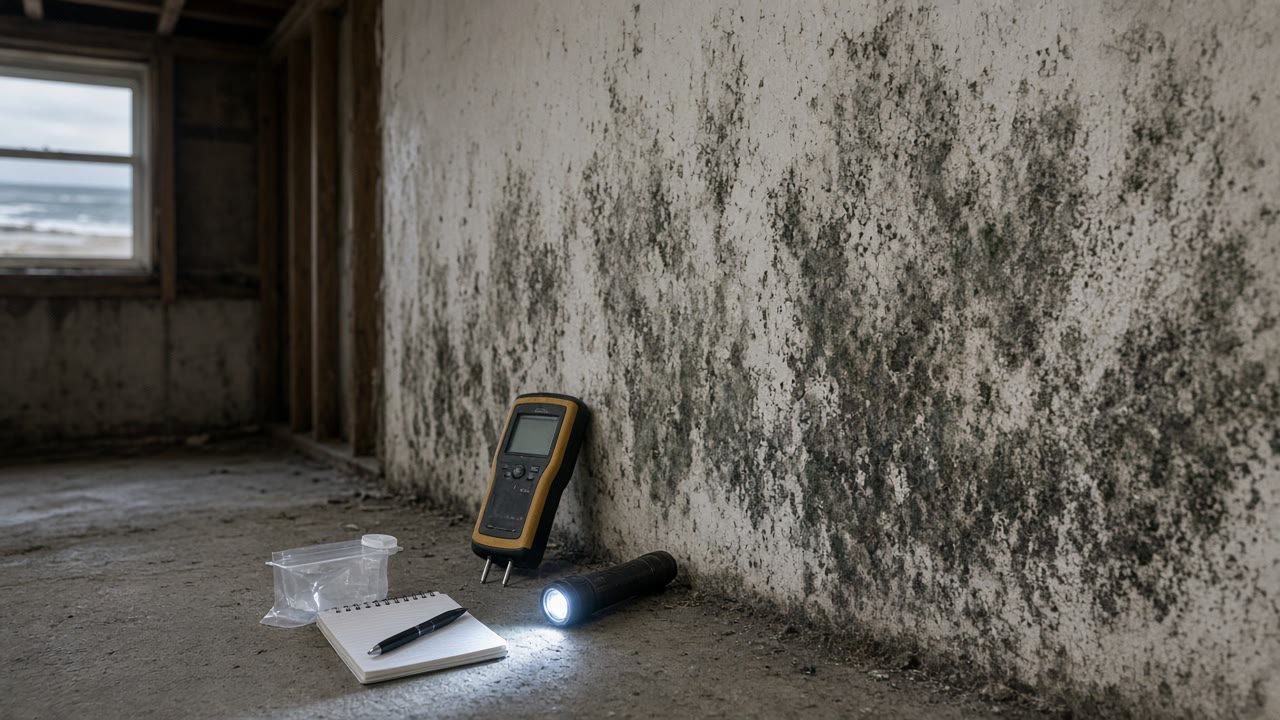
Photograph the damp or growth with something in the frame for scale, and note the date. Write down when you first smelled it, any leak or overflow you know about, and what is stored nearby. Send that to the landlord, superintendent or managing agent by email or letter, and keep a dated copy.
The state tells tenants to ask the landlord or superintendent to inspect and repair persistent mold, leaks or damage. If the landlord does not act, you can ask the local building department or code enforcement official to inspect. Send your request this week, not after the stain spreads. (NYS DOH)
What your lease may already promise
If you rent, New York Real Property Law section 235-b treats every residential lease as carrying a promise that the home and the shared areas are fit to live in. A tenant cannot sign that promise away. Conditions caused by the tenant's own misconduct are not covered.
If you own a co-op or condo unit, the answer depends on your documents and your building. Ask a New York real estate attorney what your proprietary lease or declaration says. Keep every message you send and receive. (NY Labor Law)

Send us the details
Tell us what you are seeing and which part of the building it is in. On a barrier island the room matters as much as the stain, and that is usually enough for us to say which licensed trade you actually need.
Large buildings can use their own staff
New York's licensing rules exempt an owner, a managing agent or a full-time employee of either who works on a residential building with more than four units, as long as they do not do that work commercially for the public. So a building super may lawfully handle work that a single-family house would split between two licensed firms.
That does not stop you from asking for more. You can ask the board or landlord whether it will bring in a licensed assessor anyway, so the result is independent and on paper. Put the request in writing and say who you want to read the report. (NY Labor Law)
What an independent assessment does for your case
A licensed assessor's written plan names the rooms, the quantities of material, the method, and the moisture source it can find. It also recommends which trade should fix the source. Once removal is done, the same assessor comes back, looks again and puts the result in a written clearance report.
That paper is what a board, landlord, buyer or insurance adjuster reads. If the building will not commission one, you can ask whether it will accept one you arrange. Tell us who has to approve the work, and we arrange a licensed assessor. (NY Labor Law, 1) (NY Labor Law, 2)

What you can do inside your own unit meanwhile
Dry what you can reach. Run a dehumidifier, move furniture off the wall and wipe hard surfaces. Federal EPA advice treats a small patch, roughly a bath mat or smaller, as something an owner can often clean, but that assumes you are allowed to open and clean the surface.
Do not cut into a shared wall or ceiling, because the pipes and structure may belong to the building. Keep your photos, your notes and your messages together. Call us if the growth is large, the smell is strong or nobody has answered your request. (EPA)
Read this before you call
Our guarantee
The Dry-Line Pledge
- Your request is free, and it creates no obligation.
- We charge you no fee for planning or the introduction.
- A person calls you back on the number you give.
- Inspection and removal go to two separate licensed firms.
- If an introduction does not work out, we arrange another, at no fee.
- Your $100 credit is applied exactly as our Terms say.
This pledge covers our planning and introductions. The contractor's work is covered by your contract with them. Terms.
Mold Removal Long Beach · (315) 640-3590
Start with the space, not the stain
Tell us where in the building it is and whose decision the repair is.